Willie Keith saves the Caine after the kamikaze strike
The Caine Mutiny Court-MartialWillie Keith saves the Caine after the kamikaze strike by turning a moment of apparent abandonment into an organized effort to preserve the ship and recover its crew. With the bridge clearing of smoke and the vessel still afloat, he takes command of the immediate emergency: restarting the ship’s systems, assigning damage-control tasks, and steering the Caine among the people in the water. His response reverses the scene’s momentum, shifting the crew from flight toward coordinated action.
The ship after the strike
The wheel has been left unattended, and the Caine has slewed broadside to the wind. That movement helps clear smoke from the bridge, but the damage remains serious: explosions have torn apart the deckhouse, ammunition boxes smolder, and flames and steam rise aft. The bridge offers Willie a wider view as the smoke lifts. The ship has hardly moved, the peak of Yuza Dake still bears 320, and the sea has not become rough. A few sailors drift astern, waving toward the ship; Willie estimates that only fifteen or twenty have jumped.
The altered view brings a change in Willie’s state as well as his sense of the ship’s condition. He feels a powerful calm and decides that the Caine may still be saved. Rather than treat the captain’s permission to abandon ship as an order that everyone must leave, he acts on the accompanying permission for volunteers to remain and fight the damage. That distinction gives the crew a practical alternative to abandoning a vessel that, despite the fire and explosions, has not yet lost its ability to be saved.
Orders to stay and fight
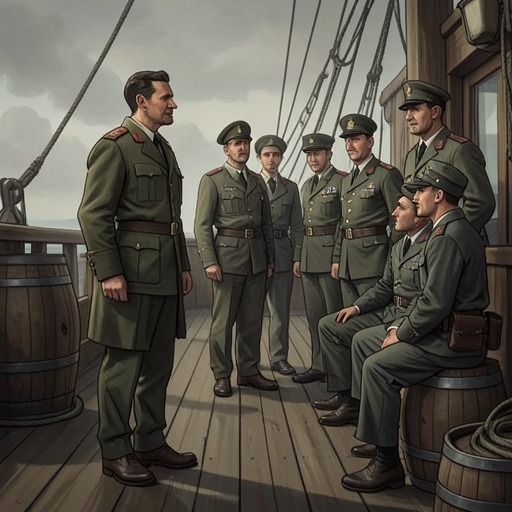
Willie first gives Ensign Farrington a specific task: start the Kohler engine on the well deck and switch on the public-address system. When the small engine starts, Willie uses the system to address the ship. He tells the crew that the known damage is concentrated in the after fireroom and explains that the alarming explosions came from ready ammunition in the galley deckhouse. He directs gunner’s mates to stand by to flood the magazines, but not to do so without his order.
His instructions also address the problem of keeping the remaining machinery and spaces functioning. The forward fireroom is told to shift to forward tanks if it cannot get suction, while stop valves are to be closed to prevent water backing into the forward lines. Pumps are to handle the water entering the after fireroom. Willie frames these orders as a reasoned plan, not a denial of danger: he urges the men to keep calm, use their drills, and remain at their posts. He argues that the ship can still reach harbor under its own power, while abandonment would leave them in the personnel pool on Okinawa; staying with the vessel might mean an overhaul in the United States.
Fighting the fire and restoring suction
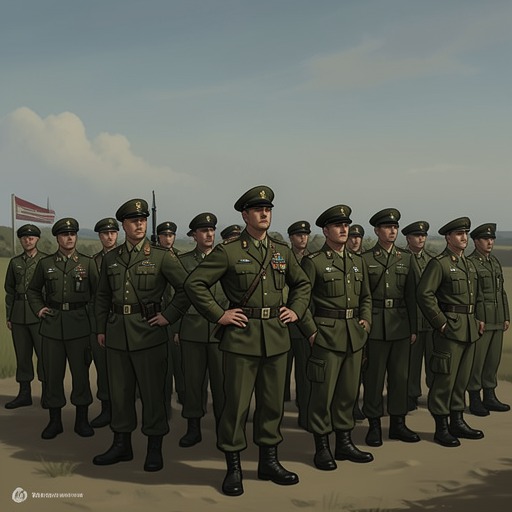
With Farrington back on the bridge, Willie gives him the wheel and goes aft to see the response for himself. The fire is being suppressed with water and foam. Sailors and officers have gathered away from the damaged deck, while a group works hoses through the opening into the fireroom. Below, the crew continues its labor as water is pumped into the space. The scene is no longer one of uncontrolled movement: hoses are in use, the gig is being bailed, and men are attending to the work in front of them.
A pharmacist’s mate and assistants are caring for the injured near the clip shack. Willie checks on the men receiving treatment, including Chief Budge, who has been hurt in the fireroom. Budge asks about a missing sailor, Horrible; Willie tells him not to worry and says he will look for him. The concern for one absent crewman sits alongside the larger task of keeping the ship afloat, making the rescue a matter of individual responsibility as well as command.
A decisive sign of progress comes when the number-one and number-two stacks pour out dark smoke and the ship vibrates. Budge reports suction in both spaces, indicating that the firerooms are functioning again. From the kamikaze’s impact until suction returns, seventeen minutes have passed. The interval gives the crisis a measurable turning point: the Caine has suffered a strike and a fire, but its essential systems have not been lost.
Recovering the swimmers
During the following hour, Willie retains his unusual calm as damage reports and smaller emergencies continue to arrive. He makes quick decisions and takes the ship slowly among the swimmers, stopping the screws whenever he approaches them. The rescue demands a different kind of control from the firefighting: the Caine must remain useful as a vessel without putting those in the water at further risk.
When the captain is brought aboard, Willie transfers the conn to Farrington and goes to the sea ladder. Keefer cannot climb aboard unaided. A sailor enters the water, secures a line around him, and the crew hauls him up. Willie catches Keefer as he reaches deck level and helps him stand. Keefer, still holding the soaked gray sack, praises Willie’s handling of the emergency and offers to recommend him for the Navy Cross. Willie does not take over the ship permanently at that moment; instead, he asks whether the captain feels well enough to resume the conn. The captain tells him to keep going and complete the pickup.
The reversal in Willie’s role
The episode makes command visible as a succession of concrete decisions: assigning the generator, using the public-address system, directing water and pump operations, confirming the return of suction, and moving carefully among swimmers. Willie’s authority is not established by a formal change of command but by what the emergency requires him to do. The captain’s earlier authorization to abandon ship remains part of the circumstances, yet Willie persuades the crew to stay through a plan that gives them tasks and a plausible objective.
The rescue also reverses the apparent outcome of the kamikaze strike. The destroyed deckhouse and scattered swimmers initially make the Caine seem lost; seventeen minutes later, suction has returned in two firerooms, and the vessel is maneuvering to recover the crew. Keefer’s jump and subsequent rescue sharpen that reversal: the man who had left the ship is brought back aboard, while Willie, who had challenged him to act, proves able to sustain the effort. The Caine is not shown as undamaged or out of danger, but it remains afloat, its crew is being recovered, and its immediate crisis has become a coordinated operation.